Tuesday, September 9, 2014
Reading Indeed Has Made Many Saints
by Father John McCloskey
The purpose of our lives as Catholics is to become saints. By God's grace, we can collaborate with Him on that lifelong task. One nearly indispensable means is spiritual reading, which is accessible to all who are literate.
Unfortunately, the majority of Catholics in North America and Europe only encounter the Bible for about 10 minutes weekly at Sunday Mass. Most of these Catholics have only a rudimentary Catholic catechetical education, and only a paltry few are familiar with any of the great Catholic spiritual classics.
On the other hand, their sight and hearing are assaulted daily by a barrage of stimulation that appears to be designed by the devil or his minions to deflect us from consideration of the supernatural life. The books and magazines that most people read are consistently and increasingly trashy. Much movie and television viewing is violent, sexually explicit, and morally bankrupt, as is much popular music. Aside from television, leisure hours are increasingly devoted to social networking, computer games, or the Internet, where serious temptation is only a click away.
I think this is an accurate portrayal of everyday life for hundreds of millions of Catholics. One remedy is Catholic spiritual reading.
"Reading indeed has made many saints." Consider St. Augustine, who heard a voice repeating "Tolle et lege" (Pick up and read!) and opened the Gospel to a passage that changed the course of his life—and of Christian civilization. St. Anthony, the founder of monasticism, was so moved by the Gospel story of the rich young man that he followed the injunction to "Sell everything you have, give it to the poor, and come follow Me." Without his obedience to the Word, who knows if Christianity could have survived the onslaught of the barbarian invasion? St. Ignatius of Loyola, recuperating from grave battle wounds, was inspired by reading the lives of the saints to radically change his life, ultimately founding the Jesuits, who became the great champions of the Catholic Reformation.
More recently, John Henry Newman's close reading of the Fathers of the Church brought him to recognize that the Anglican Church was not the Church Christ founded. And, Flannery O'Connor, the great Southern Catholic author, made a point of reading from Thomas Aquinas's Summa at least 20 minutes each day.
In St. John Paul the Great's apostolic blueprint for the 21st century, "At the beginning of the New Millennium," he urged us to "Contemplate the face of Christ," in particular through Sacred Scripture: "It is especially important that listening to the word of God should become a life-giving encounter, in the ancient and ever new tradition of lectio divina, which draws from the biblical text the living word which questions, directs, and shapes our lives." The Bible, by far the most quoted book in history, must become our favorite book, to be read and meditated upon for at least a few minutes each day.
Because the Holy Spirit worked through multiple human authors using many literary forms in the Bible, we need to rely on Christ's Church to guide us to the proper interpretation. After all, even St. Peter found some of St. Paul's writings puzzling! In addition, we must learn how to live from the Bible and make daily resolutions to that effect. Over time, as the stories of the Bible (especially those from the New Testament) become as familiar as our own life story, we will begin to live in Christ, soaked in His words and example.
Having a large Bible for home and a pocket-sized version of the New Testament (as Pope Francis advised and indeed facilitated for pilgrims to Rome by dispensing copies in St. Peter's Square) will ensure that our book is never far from us. If possible the home version should have a sound commentary concentrating more on the practical, spiritual, or ascetical sense of Scripture, since above all the Bible is a book for learning how to live the Christian life. Also useful are such books on Christ's life as Frank Sheed's classic To Know Christ Jesus, Fulton Sheen's Life of Christ, and Benedict XVI's more recent three-part Jesus of Nazareth. Complementing daily Scripture reading should be other spiritual reading, including works from the Church's magisterium, lives of and books by the saints, works of theology, and a plethora of Catholic spiritual classics.
As a general rule I advise working on just one book at a time, read from beginning to end, perhaps taking notes or otherwise highlighting particularly striking points that might later be brought to prayer or spiritual direction. The fruits of good spiritual reading should be prayer, self-denial, and an ever-growing desire to evangelize family, friends, and culture.
Finally, a few words of practical advice: When you do your spiritual reading, put yourself in God's presence and invoke the Holy Spirit. Make sure you are fully alert and in a well-lit space, far from distractions. That's right–not late at night and in bed. Don't you think God's Word and great spiritual classics deserve better than that? The day's reading need not last more than 15 minutes, but should never be less.
All of our recent impressive pontiffs, climaxing with our current Pope Francis, have urged us to spread the joy of the gospel. Our commitment to daily spiritual reading will help us become "fishers of men" unafraid, as St. John Paul II quoted from the Gospel, to "Go out into the deep for a catch."

Monday, September 8, 2014
Feast of the Nativity of the Blessed Virgin Mary - Today's Mass Readings, Monday, September 8, 2014
Feast of the Nativity of the Blessed Virgin Mary
The birthday of Mary is a great time to thank God for the gift she is to us as the Mother of God, the Mother of the Church, and our mother. Hopefully we are able to draw strength and inspiration from the holiness of her life. She was a very simple person, but this did not stop her from having the most significant role in the work of salvation. We should never rule out the possibility that God has an important plan for our lives as well.
Micah 5:1-4 (or Romans 8:28-30)
1 The Lord says: You, Bethlehem-Ephrathah, too small to be among the clans of Judah, from you shall come forth for me one who is to be ruler in Israel; whose origin is from of old, from ancient times. 2 (Therefore the Lord will give them up, until the time when she who is to give birth has borne, and the rest of his brethren shall return to the children of Israel.) 3 He shall stand firm and shepherd his flock by the strength of the Lord, inthe majestic name of the Lord, his God; and they shall remain, for now his greatness shall reach to the ends of the earth; 4 he shall be peace.
P S A L M
Psalm 13:6, 6
R: With delight I rejoice in the Lord.
5 [6] Though I trusted in your mercy. Let my heart rejoice in your salvation. (R) Let me sing of the Lord, “He has been good to me.” (R)
GOSPEL
We do not have any writings concerning the birth of Mary but we do have the birth of Jesus in the Gospels. It is important to note the role of the Holy Spirit, which gives us an indication that we can expect the Spirit to be at work in our lives every time we respond to God’s will for us. Hopefully we can remember this as it is helpful to know the Spirit is around, especially when following God’s will becomes difficult.
GOSPEL ACCLAMATION
Blessed are you, holy Virgin Mary, deserving of all praise; from you rose the sun of justice, Christ our God.
Matthew 1:1-16, 18-23
1 The Book of the genealogy of Jesus Christ, the son of David, the son of Abraham. 2 Abraham became the father of Isaac, Isaac the father of Jacob, Jacob the father of Judah and his brothers. 3Judah became the father of Perez and Zerah, whose mother was Tamar. Perez became the father of Hezron, Hezron the father of Ram, 4 Ram the father of Amminadab. Amminadab became the father of Nahshon, Nahshon the father of Salmon, 5 Salmon the father of Boaz, whose mother was Rahab. Boaz became the father of Obed, whose mother was Ruth. Obed became the father of Jesse, 6Jesse the father of David the king. David became the father of Solomon, whose mother had been the wife of Uriah. 7Solomon became the father of Rehoboam, Rehoboam the father of Abijah, Abijah the father of Asaph. 8Asaph became the father of Jehoshaphat, Jehoshaphat the father of Joram, Joram the father of Uzziah. 9Uzziah became the father of Jotham, Jotham the father of Ahaz, Ahaz the father of Hezekiah. 10 Hezekiah became the father of Manasseh, Manasseh the father of Amos, Amos the father of Josiah. 11 Josiah became the father of Jechoniah and his brothers at the time of the Babylonian exile. 12 After the Babylonian exile, Jechoniah became the father of Shealtiel, Shealtiel the father of Zerubbabel, 13 Zerubbabel the father of Abiud. Abiud became the father of Eliakim, Eliakim the father of Azor, 14 Azor the father of Zadok. Zadok became the father of Achim, Achim the father of Eliud, 15 Eliud the father of Eleazar. Eleazar became the father of Matthan, Matthan the father of Jacob, 16 Jacob the father of Joseph, the husband of Mary. Of her was born Jesus who is called the Christ. 18 Now this is how the birth of Jesus Christ came about. When his mother Mary was betrothed to Joseph, but before they lived together, she was found with child through the Holy Spirit. 19Joseph her husband, since he was a righteous man, yet unwilling to expose her to shame, decided to divorce her quietly. 20 Such was his intention when, behold, the angel of the Lord appeared to him in a dream and said, “Joseph, son of David, do not be afraid to take Mary your wife into your home. For it is through the Holy Spirit that this child has been conceived in her. 21 She will bear a son and you are to name him Jesus, because he will save his people from their sins.” 22 All this took place to fulfill what the Lord had said through the prophet: 23 “Behold, the virgin shall be with child and bear a son, and they shall name him Emmanuel,” which means “God is with us.”
HAPPY BIRTHDAY,
MOTHER MARY!
September 8 was chosen because in the fifth century, a church in Jerusalem was dedicated on this day, which was said to have been built above the place where Mary was born. Nazareth, Sepphoris, Jerusalem? Nobody knows. And we don’t need to know.
The Church presents us today with the genealogy of Jesus. Matthew mentions four women in this genealogy: Tamar, Rahab, Ruth and Bathsheba. Tamar disguised herself as a temple prostitute to have intercourse with her father-in-law and produced a son. Rahab was a prostitute in Jericho, Ruth was a Moabite, an archenemy of the Israelites, and Bathsheba committed adultery with King David. In these four sinful women, the curse of Eve’s sin becomes visible. Sin begets sin, an endless, ever escalating curse. And then Matthew mentions a fifth woman: Mary. With her, the ancient curse of sin is finally broken and transformed into a chain of blessings. With her sinlessness and obedience to God’s plans, salvation dawns. The Second Vatican Council states that Mary “is inseparably linked with her Son’s saving work.”
Every human birth is a call for joy and new hope. Loving parents have shown hope in a world filled with sorrow, suffering, wars and hopelessness. The newborn child has the potential to become a channel of God’s love in this often dark world. This was especially true when Mary was born. She foreshadows God’s love for mankind that was manifested in her Son Jesus.
On this joyful day, let us try to bring some joy and hope into our world by making somebody happy — somebody who suffers or is lonely, who is weighed down by failure and rejection. Yes, bring “joy to the world” as Mary’s birth did. Fr. Rudy Horst, SVD
REFLECTION QUESTIONS: Who is Mary for you? Do you have just a sentimental attitude towards her, or do you try to imitate her humility and faith?
Lord, thank You for giving us Your Mother Mary as our Mother, too. May she become more and more my inspiration and model.
Sunday, September 7, 2014
Today's Mass Readings - Sunday, September 7, 2014 with Reflection
1ST READING - Ezekiel 33:7-9
7 Thus says the Lord: You, son of man, I have appointed watchman for the house of Israel; when you hear me say anything, you shall warn them for me. 8 If I tell the wicked, “O wicked one, you shall surely die, and you do not speak out to dissuade the wicked man from his way, the wicked shall die for his guilt, but I will hold you responsible for his death. 9 But if you warn the wicked, trying to turn him from his way, and he refuses to turn from his way, he shall die for his guilt, but you shall save yourself.
P S A L M - Psalm 95:1-2, 6-7, 8-9
R: If today you hear his voice, harden not your hearts.
1 Come, let us sing joyfully to the Lord; let us acclaim the rock of our salvation. 2 Let us come into his presence with thanksgiving; let us joyfully sing psalm to him. (R) 6 Come, let us bow down in worship; let us kneel before the Lord who made us. 7 For he is our God, and we are the people he shepherds, the flock he guides. (R) Oh, that today you would hear his voice: 8 “Harden not your hearts as at Meribah, as in the day of Massah in the desert, 9 where your fathers tempted me; they tested me though they had seen my works.” (R)
2ND READING - Romans 13:8-10
8 Brothers and sisters: Owe nothing to anyone, except to love one another; for the one who loves another has fulfilled the law. 9 The commandments, “You shall not commit adultery; you shall not kill; you shall not steal; you shall not covet,” and whatever other commandment there may be, are summed up in this saying, namely “You shall love your neighbor as yourself.” 10 Love does no evil to the neighbor; hence, love is the fulfillment of the law.
GOSPEL ACCLAMATION
God was reconciling the world to himself in Christ and entrusting to us the message of reconciliation.
Matthew 18:15-20
15 Jesus said to his disciples: “If your brother sins against you, go and tell him his fault between you and him alone. If he listens to you, you have won over your brother. 16 If he does not listen, take one or two others along with you, so that ‘every fact may be established on the testimony of two or three witnesses.’ 17 If he refuses to listen to them, tell the church. If he refuses to listen even to the church, then treat him as you would a Gentile or a tax collector. 18 Amen, I say to you, whatever you bind on earth shall be bound in heaven, and whatever you loose on earth shall be loosed in heaven. 19 Again, amen, I say to you, if two of you agree on earth about anything for which they are to pray, it shall be granted to them by my heavenly Father. 20 For where two or three are gathered together in my name, there am I in the midst of them.”
| SABBATH | ||
FRATERNAL CORRECTION
In the Bible, we sometimes come across passages that are as relevant and practical in our lives today as they were thousands of years ago when they were first written. Today’s readings are good examples of such passages. They remind us that, as faithful Christians, it is our responsibility to reach out to our not-so-faithful brothers and sisters and bring them back into the fold. They even recommend practical steps on how to go about doing this.
Broken relationships are common everywhere. Gossiping, telling the sins and faults of others behind their backs, is even more common. It is obvious that this destroys relationships. Jesus knows this only too well and so tells us what to do when we see somebody making mistakes — to confront the wrongdoer in an open and face-to-face dialogue.
I know that is not part of the Philippine culture. In Europe, this is common and it is not taken personally, while here, every word that sounds critical is taken personally. And yet, we cannot say, “Lord, sorry, what You teach us today does not apply in our culture.”
Some people correct others because they are busybodies. Others, like the Pharisees, do so in order to exalt themselves as they put others down. The disciple, however, intervenes out of love — love for God and His children, but especially for the sinner who is damaged the most by his own sin.
“But,” you may say, “they won’t listen, so why bother?” Simple —because God says so!
In baptism and confirmation, you were anointed priest, prophet andking; you share in Christ’s priestly, royal and prophetic roles. It is easy and pleasant to participate in Christ’s priesthood and royalty, but we tend to avoid the prophetic role. The bottom line is, we owe a debt of love to our brothers and sisters, as St. Paul writes in today’s Second Reading. If we proceed in a spirit of love, with God’s help we have a good chance of bringing back a child of His gone astray. It is well worth trying. Fr. Rudy Horst, SVD
REFLECTION QUESTION: Do you correct others? And if you do, what is your motive — pride or love?
Lord, give me the courage to help a brother or sister who has committed a mistake — and the right words so that the person feels my love and Yours.
Blessed Frederick Ozanam, pray for us.
Do you want to receive this in your email. To get Bo Sanchez to send it to you personally, register and log-on to http://kerygmafamily.com. |
Thursday, September 4, 2014
The short secret to long life: Boost your immune system
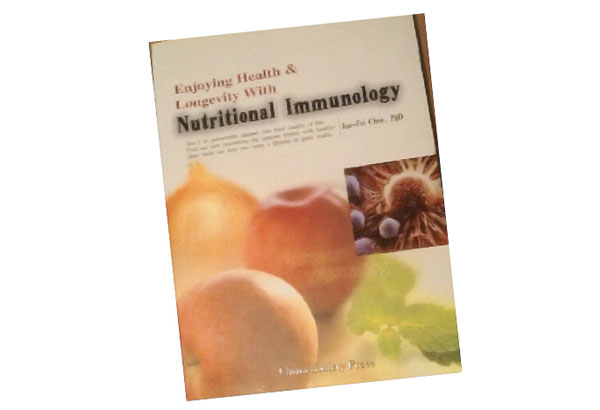
Yes, there’s a doctor in the house, Dr. Jau-Fei Chen, but she believes that we don’t have to look far because the best doctor in the world can be found within us our immune system. And a healthy and well-cared-for immune system is the key to effectively preventing illnesses.
Dr. Chen has made a name for herself in the field of nutritional immunology not in Taiwan, where she was born, but in the US, where her work in disease prevention has been widely recognized.
Nutritional immunology? Now, that’s a mouthful!
Dr. Chen explains, “Nutritional immunology is a science that studies the link between nutrition and the immune system. According to nutritional immunology, nutrient-rich foods contribute to a strong immune response, which in turn neutralizes disease-causing germs and prevents infections. Similarly, when we are ill, such foods will help us to recover faster.”
She notes that while many take the effort to eat nutritiously when they’re (already) sick, only a few take precautions, which could have prevented the illness in the first place.
Really now, Dr. Chen’s health prescription is simply this: Prevent disease and you don’t have to worry about curing it.
Dr. Chen defines the immune system as an amazing “proactive defender.”
In short, the secret to long life is to boost our immune system. And we can do this by eating a large variety of plant foods, which aid digestion and flush out toxins. On the other hand, “consuming too many animal products and high-fat foods will impair immunity, leaving us in a tired, lethargic state.”
A healthier diet = a better life. Dr. Chen arms us with more nutritional wisdom in this Q & A from her book Enjoying Health & Longevity with Nutritional Immunology.
What are some of the plant foods that are rich in antioxidants, phytochemicals, and polysaccharides that help prevent cancer?
Among the nutrient powerhouses are:
• Antioxidants — grape seed, cactus fruit, ginseng berry, rose, five leaf ginseng, and citrus.
• Phytochemicals — soy, cactus, broccoli, cauliflower, ginseng berry, chrysanthemum, cassia tora, mulberry leaf, and sophora bean.
• Polysaccharides — pearl, mushrooms like shiitake, reishi, maitake, coriolus versicolor, and agaricus blazel murill.
Can fish oil supplements prevent cancer?
So far, research has only shown the beneficial effects of omega-3 fatty acids from natural fish sources. Research has not yet demonstrated any possible benefit from taking fish oil supplements.
If I have a genetic risk of cancer, is it too late for me to prevent it?
Cancer is caused when our cells mutate ... Nutrition cannot change our genes. But by eating healthy, we can prevent genetic illnesses from being triggered, help control the illness or reduce the symptoms. The American Cancer Society advises that certain nutrients may protect our cells from mutating or becoming damaged. Physical activity and weight control may also delay or prevent the development of cancer in people with increased genetic risk.
Can I get cancer if I am overweight?
The American Cancer Society says that being overweight or obese can increase the risk of breast cancer among post-menopausal women and some other cancers such as those of the colon, gallbladder, and kidney.
The American Heart Association reports that people who are more than 30 percent over their ideal body weight are more likely to develop heart disease even if they have no other risk factors like smoking and diabetes. This is because the extra weight puts a strain on the heart and increases blood pressure and cholesterol.
Should I avoid preserved meats?
Experts say this could be due to nitrites, which are added to many preserved meats to maintain their color and prevent contamination with bacteria. Nitrites can be converted in the stomach to carcinogenic nitrosamines, which may increase the risk of stomach cancer.
Diets high in vegetables and fruits that contain vitamin C and phytochemicals retard the transformation of nitrites to nitrosamines.
Is it true that cooking meat or boiling milk can be harmful?
Cooking and heating are actually necessary to remove harmful germs from meat and milk. However, research suggests that frying, broiling, or grilling meats at very high temperatures creates chemicals that might increase cancer risk. Experts say that the process of pasteurizing milk not only removes germs but also detroys milk’s natural enzymes and alters its delicate proteins, causing human-like chronic illnesses and even stillbirth in lab animals.
How much water and other fluids should I drink?
The American Cancer Society suggests that drinking water and other liquids may reduce the risk of bladder cancer as the water dilutes the concentration of carcinogens and shortens the time in which they are in contact with the bladder lining. Although drinking eight cups of water a day is recommended, theAmerican Journal of Physiology reports that the actual requirement for each individual can differ. Too much water may become burdensome and lead to water intoxication, where the kidney cannot keep pace with the fluid intake.
Are there nutrients that are only found in animal products and not plant foods?
All the nutrients needed to support and enhance our immune functions are readily found in plant foods.
Does “natural” equal “healthy”?
No, not everything natural is healthy. For example, herbs are divided into food herbs and medicinal herbs. Medicinal herbs cause side effects while food herbs don’t. The compound ephedrine, from the herb ephedra, can cause brain hemorrhage in serious cases. Cocaine and tobacco are other examples of natural herbs that can cause harmful side effects. Experts also say that some herbs, although natural, can cause adverse effects when taken with certain prescription or over-the-counter drugs.
Wednesday, September 3, 2014
Finding Release from the Fear of Loneliness
Benjamin Mann

I recently flew back home from Holy Resurrection Monastery, where I will return as a postulant – the first stage of a formal monastic commitment – in approximately three months. As I looked out the airplane window, anticipating our landing and contemplating the future, I felt good: confident in my direction, though content with the prospect of a break. At that moment, though, a song came into my head that I associate with terrible experiences of anxiety and depression: Radiohead’s “Where I End and You Begin.”
Whatever you think of their music in general (and my opinion is mixed), the track is surely among the feel-bad hits of the 21st century: an insistent bassline conveys inescapable dread, while Thom Yorke’s simple, impressionistic lyrics offer a futile message to someone who can no longer hear it, or whose hearing no longer makes a difference: “There’s a gap in between / There’s a gap where we meet / Where I end and you begin … I am up in the clouds / And I can’t come down / I can watch but not take part / Where I end and where you start / Where you left me alone.”
I have traveled with this song before. Just over a decade ago – a couple of years before my initial Christian conversion – I played it incessantly on an old portable CD player as I flew home from my first semester of college. It was a low point in my life, during which I felt radically disconnected from others and saw little reason to live. Whether or not it was written to describe that feeling of desperate loneliness, the Radiohead song certainly did the trick: “‘X’ will now mark the place / Like the parting of the waves / Like a house falling into the sea . . .”
That is the feeling I, and probably many others, have long associated with “Where I End and You Begin.” Imagine my surprise, then, when it came powerfully back into my head during that recent flight back from the monastery – accompanied, this time, by an almost completely different feeling, devoid of anxiety or depression. In my mind, the same bassline and lyrics played, yet my response was one of resigned serenity and ultimate acceptance. A complex feeling, but not bad. The song that once soundtracked terrible inner turmoil, now accompanied a hard-won sense of peace.
The irony of this was not lost on me, even at the time. At first, I ascribed it to the natural process of maturing: “You know your youth is ending, when Radiohead’s ‘Where I End…’ gives you a feeling of peace and resignation!” This is undoubtedly part of the story, but I saw quickly that it was not the whole. After all, there is more to my current life than the usual anti-adolescent resolutions and decisions of someone approaching age 30 and putting his life in order.
One of those decisions, after all, was the choice to become a monk: to leave many good things behind, including the prospect of marriage, in order to enter more deeply into the essential poverty and pilgrim-condition of the Church – our existence as Homo Viator, “man the wayfarer” en route to eternity.
And so, having resolved to serve God in this way, I relate to many of my old anxieties as one “forgetting what lies behind and straining forward to what lies ahead” (Phil. 3:13). Yet this peace comes at a cost – the cost of discipleship, which is ultimately one’s very life. I have found peace, a release from many previous fears; but it is a peace that costs everything.
*
I do not think my first hearing of that Radiohead song – with the deep alienation and dread that it both accompanied and summed up – was just a matter of youthful immaturity. There is profound meaning in what many dismiss as mere “adolescent angst.” My first two years of college brought me face-to-face with the question of life’s meaning and whether it was even worth living at all. My inner turmoil stemmed, in part, from a confrontation with basic existential realities: the fear of loss, of failure, of death, of a final absurdity behind our lives. I think the same is true for many young people, even if they cannot articulate it.
Likewise, the profoundly different feeling that the same song gives me now – the strange sense of storm-swept calm – is not just a matter of growing up and moving past one’s insecurities. It also reflects the reality of conversion: Jesus Christ, the answer to the questions and fears of mankind, has sought me out and called me by name; and while one must – in some way – give up everything to follow him (cf. Luke 14:33), it is precisely in handing over all things to him that one finds the peace that the world cannot give. Even amid anxiety, disappointment, abandonment, danger, or depression, the reality of this peace abides in my life.
Life has not become a breeze, of course. Discipleship is hard, and its basic criterion is the Cross. But there is a difference: one suffers in union with the Suffering God, and with an awareness of pain’s ultimate meaning. “Whatever I am, I can never be thrown away,” wrote Bl. John Henry Newman. “If I am in sickness, my sickness may serve Him, in perplexity, my perplexity may serve Him. If I am in sorrow, my sorrow may serve Him. He does nothing in vain … He may make me feel desolate, make my spirits sink, hide my future from me. Still, He knows what He is about.”
It is liberating on the deepest level to know that in God’s providence one “can never be thrown away.” I have been freed, in particular, from the black cloud that loomed over my entire adolescence and early adulthood: the fear of loneliness.
This is a fear that haunts many, and it is no trivial or juvenile thing. We do incredible, terrible, amazing, absurd, and sometimes tragic things out of our fear of loneliness. I can hardly believe the things I have seen people – myself included – do on the basis of such fear: the fear that, in the end, I will not really be accepted or loved; and that some inner need will break open and spill out within me, which no one will be able to drain out, and I will silently drown in it, unable even to convey that I am drowning.
This is the fear that began in me around age 13, and did not really end until I made the decision – 15 years later – to give up the possibility of marriage, and begin the process of becoming a monk. Up to that point, this fear of loneliness cast a shadow over almost everything I did.
It was this fear, I think, that Radiohead’s “Where I End and You Begin” once signified for me. It was a vivid, haunting abstract picture of what one fears, in his fear of loneliness: the living nightmare of feeling insurmountably separated from anyone who could possibly help, even while living right alongside them. “There’s a gap in between, there’s a gap where we meet . . . I can watch and not take part, where I end and where you start . . .”
But why did that end, for me, with the choice of monasticism and lifelong celibacy? And why do I now hear the song so differently?
*
I have chosen to be alone. Whatever gifts God may bestow on consecrated persons living in community, there is a true forsaking of many natural consolations, especially spousal companionship and the prospect of children. One’s prior friendships, too, are often profoundly changed, if not ended. And such things are not automatically replaced with consolations of a supernatural kind. The sacrifice is real.
But I have chosen to be alone in a way which reinforces the fact that I am never alone, that I cannot possibly be alone. “Whatever I am, I can never be thrown away.” And having chosen to be alone in this way, I am no longer afraid that I will fall helplessly into that suffocating loneliness that is so desperate to reach out, to be found, to connect on the immediate human level, as if everything depended on it.
I am already found by God, already understood and loved by him, beyond anything I could even desire. The monastic life I have chosen is founded on this realization and its ultimate sufficiency. Yet the same is true universally: we are known, loved, and understood by Christ the Lord – no matter how things may feel or appear.
There can be – I already know – moments of great loneliness within the monastery. They are found in any life. But these moments no longer point toward some greater object of fear, some massive lurking anxiety about being cut off from everything and everyone. I have chosen the life of a stranger and a pilgrim: but this is precisely the life which, lived authentically, cannot fail to unite me in Christ with all people, and to make me aware that I am already home in God’s presence. There will be times of loneliness in such a life; but I am no longer threatened by the prospect.
Not everyone, of course, can find release from the fear of loneliness in this exact way. Not everyone can follow a monastic path in the concrete sense. But every believer can work – and it is hard work, not done in a day! – to ground his life in those truths that the monastic journey expresses: that one is never alone, never forsaken by God or even really disconnected from others.
These are the truths that have freed me, especially from the crippling fear of loneliness. Monasticism is a sacred and time-tested structure for their realization. But any life can be devoted to the realization of these truths, if we are intentional and courageous about it.
Self-renunciation, the handing-over of one’s life in which it is precisely regained, together with eternal life: this is the end of the fear of loneliness. The things that once signified that fear to us – songs, books, memories, places, even interpersonal relationships – will gain a new significance. And in our relationship both to God, and to other people, we may become able to say (as a gifted religious artist once sang, perhaps in answer to Radiohead’s lyric):“I can no longer tell / Where ‘you’ end and ‘I’ begin.”

By Benjamin Mann
Benjamin Mann is a Byzantine Catholic, former journalist, and incurable philosopher. He is preparing to enter monastic life at Holy Resurrection Monastery in St. Nazianz, Wisconsin.
Tuesday, September 2, 2014
“What are you willing to die for”
Fr. Shay Cullen
PREDA Foundation
PREDA Foundation
 “What are you willing to die for “, It was a very challenging question that Pope Francis presented to the thousands of young people gathered for the beatification of the 130 martyrs in Korea last week. And it is also challenging for all of us who claim to be Catholics and Christians. His message was clear in calling on the youth and people to reject a life selfish gratification based on gross materialism and living for wealth alone and instead to strive for equality and protect the poor and their human rights.
The Pope visited a catholic home for the elderly and embraced some of them showing compassion and love. In Korea as in many wealthy nations there are serious pockets of neglect of the elderly. Although Korea is one of the wealthiest nations in the world half of the old folk live in poverty. Instead of cherishing and respecting them all with a life of dignity and sufficiency like western materialistic societies many of the senior citizens are marginalized and rejected as people of little value.
Many are locked away in retirement homes and some tied to beds and chairs and given tranquilizer drugs that leaves them in a state of semi-conscious stupor that accelerates dementia. New legislation in Belgium and Switzerland ,and the Netherlands allows them to be helped to kill themselves by “assisted suicide”. Where will this trend end? Soon the practice could be for nasty relatives and government care-givers to bully and persuade them to kill themselves and not go on being a financial and medical burden to the rest of us. This is an attitude arising from loveless selfish materialism.
The Pope reminded us that the early catholics of Korea sacrificed themselves for their needy bothers and sisters, “They knew the price of discipleship ..and were willing to make the great sacrifices”. The Pope pointed out that their love and courage and rejection of the strict unbending and unequal social structure of their day is an inspiration for people alive today. Their belief in Jesus of Nazareth and his teaching of a Kingdom of love ,equality and social justice led to their execution. The rich cant stand talk of equality.
Pope Francis’s compassion for the bereaved families of the hundreds of school children that drowned when the ferry boat sunk of South Korea showed through also when he and the organizers of the Mass of Beatification did not allow the authorities to drive away the protestors,one on hunger strike, demanding the truth about the sinking of the ferry. The Pope had met them in private and now embraced them in public. Bishop Kang stated that “to forcibly move people crying for justice in order to celebrate Mass simply could not happen – if it did the Mass would have no meaning”
When Pope Francis comes to visit the Philippines next January he will find many martyrs including priests and pastors,human rights workers ,who gave their lives for the poor and exploited and were executed by death squads run by military and local government officials.
One of the worst suspected and accused military generals,the darling of the previous government of President Gloria Arroyo who herself is in detention for plunder awaiting trial is Retired Army Maj. Gen. Jovito Palparan. He was arrested recently after four years on the run from the charges of allegedly running death squads wherever he was assigned around the Philippines and allegedly left a trail of blood of assassinated civilians who dared to criticize the government. Known as “The Butcher” for these alleged crimes he will be put on trial for the disappearance and suspected murder of two student activists.
Like the Korean martyrs we should be ready to give up some comforts of our easy life and defend the abused children and those poor people exploited by the rich 1 % that owns 70% of the Philippines. We need the spiritual commitment and belief in what is right and good and be ready to put aside selfish desires and greed to help others in great need.
This the heart of the Pope’s message. When Francis comes to the Philippines I hope he will not be feted and manipulated by glory seeking rich elites and publicity seeking politicos. He will, we hope, visit the poor and the victims of abuse and survivors of the greatest typhoon. He will see little reconstruction of homes,schools and public services. Political corruption is still rife and raging wherever there is money to be stolen. His message will be equally challenging for sure and we will do well to heed it and act in solidarity with those in great need wherever they may be.
shaycullen@preda.org , www.preda.org
Monday, September 1, 2014
A Winning Program for Renewal
by Father John McCloskey
Recently, I wrote here about the perils and benefits of technology. Assuming that many of you are on your way to freedom from serious addiction to technology, I hope you have more time to dedicate to the most challenging task of our time – re-conversion of a once-great country (America) and civilization (the West), both now swimming in hedonism and practical atheism.
The model we will need to follow is that of the early Church. The late Roman Empire, crumbling through plagues, demographic and moral decline, barbarian invasions, and what former President Jimmy Carter would likely call imperial malaise, was providentially "captured" by Christianity so that it could begin a centuries-long process of morphing into the West or Christendom.
How did the early Christians do it? Certainly not by force of arms. Rather, "A new command I give you: Love one another. As I have loved you, so you must love one another. By this all men will know that you are my disciples, if you love one another."
For specifics on how this Christian mandate of love led within a few centuries to large-scale conversions, I highly recommend Rodney Stark's book The Rise of Christianity. Although Stark is not a Catholic, his well-researched findings provide real pointers for those of us wrestling with our challengingly neo-pagan times.
Consider:
In 165, during the reign of Marcus Aurelius, an epidemic struck that carried away during the course of fifteen years up to a third of the total population of the empire, including Marcus Aurelius himself. Less than 100 years later, a similar epidemic, most likely of measles, struck again with similar results. Historians generally acknowledge that these epidemics may have contributed more to Rome's decline than the normally attributed cause of moral degeneration.
According to Stark, these epidemics favored the rapid rise of Christianity for three reasons. First, Christianity offered a more satisfactory account than paganism of "why bad things happen to good people," based on the centrality of the suffering and Cross of Christ. Second, "Christian values of love and charity, from the beginning, had been translated into norms of social service and community solidarity. When disasters struck, the Christians were better able to cope, and this resulted in substantially higher rates of survival. This meant that in the aftermath of each epidemic, Christians made up a larger and larger percentage of the population even without new converts." Last, these epidemics left large numbers of people without the interpersonal bonds that would have restrained them from becoming Christians.
Stark also produces impressive evidence that "Christianity was unusually appealing to pagan women" because "within the Christian subculture women enjoyed far higher status than did women in the Greco-Roman world at large." He shows that Christianity recognized women as children of God with the same supernatural destiny. Moreover Christian prohibitions against polygamy, divorce, birth control, abortion, infanticide, etc., changed women's status from powerless serfs in bondage to men, to women with dignity and rights in both the Church and the State.
Stark establishes four conclusions. First, Christian subcultures rapidly produced a substantial surplus of females as a result of Christian prohibitions against infanticide (normally directed against girl infants) and abortion (often producing the death of the mother) and the high rate of conversion to Christianity among women. Second, the higher status Christianity gave women made it highly attractive to them. Third, the surplus of Christian women and of pagan men produced many marriages that led to the secondary conversions of pagan men to the Faith, a phenomenon that continues today. Finally, the abundance of Christian women resulted in higher birthrates; superior fertility contributed to the rise of Christianity.
Adding to the dynamism of early Christianity, as a result of the social stigma of being a Christian and the danger of persecution and even martyrdom left Christianity largely free of what Stark refers to as the "free riders," those who want to reap the benefits of religion without sharing in its sacrifices and commitments. Perhaps we could say that among the first Christians during the first several centuries of the Faith, there was considerably more wheat than chaff.
Stark's conclusion? Christianity grew:
...because Christians constituted an intense community, able to generate the "invincible obstinacy" that so offended the younger Pliny but yielded immense religious rewards. And the primary means of its growth was through the united and motivated efforts of the growing numbers of Christian believers, who invited their friends, relatives, and neighbors to share the "good news."
At the heart of this willingness to share one's faith was doctrine, that which was to be believed. And perhaps the chief doctrinal innovation of Christianity to a pagan world groaning under a host of miseries and saturated with capricious cruelty and the vicarious love of death was that "because God loves humanity, Christians may not please God unless they love one another."
What is the lesson we can draw for our culture? How about practicing the corporal and spiritual works of mercy?
Corporal Works: Feeding the hungry, giving drink to the thirsty, clothing the naked, visiting the sick, sheltering the homeless, visiting the imprisoned, burying the dead.
Spiritual Works: Consoling the doubtful, instructing the ignorant, admonishing the sinners, comforting the afflicted, forgiving offenses, bearing wrongs patiently, praying for the living and the dead.
Want to change the world for Christ and help re-evangelize our country? Get with the early Christians' winning program.
First appeared in The Catholic Thing in August, 2014.
Subscribe to:
Posts (Atom)


 Posts
Posts


